
Fortekor
Fortekor Palatable and Flavoured Tablets are for the treatment of congestive heart failure in dogs, and chronic kidney disease in cats. The tablets work to reduce blood pressure and the blood volume load on heart of dogs, and to reduce the glomerular blood pressure in the kidneys of cats.
Fortekor Tablets are beige to light brown, ovaloid, and scored on both sides so that they can be divided for easy and accurate dosing.
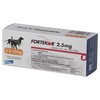
Fortekor 2.5mg Tablets for Cats and Dogs
£0.58Fortekor 2.5mg Tablets are indicated for the treatment of heart failure in dogs, and chronic renal insufficiency in cats. For Dogs with Congestive Heart Failure : Fortekor helps reduce...[More info]
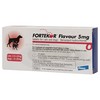
Fortekor 5mg Flavoured Tablets for Cats and Dogs
£0.91Fortekor 5mg Palatable Tablets are indicated for the treatment of heart failure in dogs, and chronic renal insufficiency in cats. For Dogs with Congestive Heart Failure : Fortekor helps...[More info]
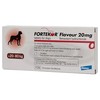
Fortekor 20mg Flavoured Tablets for Dogs
£1.98Fortekor 20mg Palatable Tablets are indicated for the treatment of heart failure in dogs. For Dogs with Congestive Heart Failure : Fortekor helps reduce their blood pressure and blood...[More info]
Contraindications
Do not use in case of hypersensitivity to the active substance or to any of the excipients.
Do not use in cases of hypotension, hypovolaemia, hyponatraemia or acute renal failure.
Do not use in cases of cardiac output failure due to aortic or pulmonary stenosis.
Do not use during pregnancy or lactation (section below).
Special warnings for each target species
None.
Special precautions for use
Special precautions for use in animals
No evidence of renal toxicity of the veterinary medicinal product has been observed (in dogs or cats) during clinical trials, however, as is routine in cases of chronic kidney disease, it is recommended to monitor plasma creatinine, urea and erythrocyte counts during therapy.
The efficacy and safety of FORTEKOR has not been established in dogs and cats below 2.5 kg body weight.
Special precautions to be taken by the person administering the veterinary medicinal product to animals
Wash hands after use.
In case of accidental oral ingestion, seek medical advice immediately and show the label or the package leaflet to the physician.
Pregnant women should take special care to avoid accidental oral exposure because angiotensin converting enzyme (ACE) inhibitors have been found to affect the unborn child during pregnancy in humans.
Adverse reactions (frequency and seriousness)
In double-blind clinical trials in dogs with congestive heart failure, FORTEKOR Flavour was well tolerated with an incidence of adverse reactions lower than observed in placebo-treated dogs.
A small number of dogs may exhibit transient vomiting, incoordination or signs of fatigue.
In cats and dogs with chronic kidney disease, FORTEKOR Flavour may increase plasma creatinine concentrations at the start of therapy. A moderate increase in plasma creatinine concentrations following administration of ACE inhibitors is compatible with the reduction in glomerular hypertension induced by these agents, and is therefore not necessarily a reason to stop therapy in the absence of other signs.
FORTEKOR Flavour may increase food consumption and body weight in cats.
Emesis, anorexia, dehydration, lethargy and diarrhoea have been reported in rare occasions in cats.
Use during pregnancy, lactation or lay
The safety of FORTEKOR Flavour has not been established in breeding, pregnant or lactating dogs and cats.
Pregnancy
Do not use during pregnancy or lactation.
Benazepril Reduced ovary/oviduct weights in cats when administered daily at 10 mg/kg body weight for 52 weeks.
Laboratory studies in rats have shown evidence of embryotoxic effects (foetal urinary tract malformation) at maternally non-toxic doses.
Interaction with other medicinal products and other forms of interaction
In dogs with congestive heart failure, FORTEKOR Flavour has been given in combination with digoxin, diuretics, pimobendan and anti-arrhythmic veterinary medicinal products without demonstrable adverse interactions.
In humans, the combination of ACE inhibitors and Non-Steroidal Anti-Inflammatory Drugs (NSAIDs) can lead to reduced anti-hypertensive efficacy or impaired renal function. The combination of FORTEKOR Flavour and other anti-hypertensive agents (e.g. calcium channel blockers, β-blockers or diuretics), anaesthetics or sedatives may lead to additive hypotensive effects. Therefore, concurrent use of NSAIDs or other medications with a hypotensive effect should be considered with care. Renal function and signs of hypotension (lethargy, weakness etc) should be monitored closely and treated as necessary.
Interactions with potassium preserving diuretics like spironolactone, triamterene or amiloride cannot be ruled out. It is recommended to monitor plasma potassium levels when using FORTEKOR Flavour in combination with a potassium sparing diuretic because of the risk of hyperkalaemia.
Amounts to be administered and administration route
FORTEKOR Flavour should be given orally once daily, with or without food. The duration of treatment is unlimited.
FORTEKOR Flavour 5 mg tablets are flavoured and are taken voluntarily by most dogs and cats.
Dogs: FORTEKOR Flavour should be administered orally at a minimum dose of 0.25 mg (range 0.25-0.5) benazepril hydrochloride/kg body weight once daily,
Cats: FORTEKOR Flavour should be administered orally at a minimum dose of 0.5 mg (range 0.5-1.0) benazepril hydrochloride/kg body weight once daily
Overdose (symptoms, emergency procedures, antidotes), if necessary
FORTEKOR Flavour reduced erythrocyte counts in normal cats when dosed at 10 mg/kg body weight once daily for 12 months and in normal dogs when dosed at 150 mg/kg body weight once daily for 12 months, but this effect was not observed at the recommended dose during clinical trials in cats or dogs.
Transient reversible hypotension may occur in cases of accidental overdose. Therapy should consist of intravenous infusion of warm isotonic saline.
Withdrawal period
Not applicable.
 A-Z
A-Z
 Special Offers
 VetUK Own Brand
 Pet Meds
 Dog
Dog
 Cat
Cat
 Horse Supplies
 Small Animals
 Aquarium & Pond Supplies
 Birds
Birds
 Veterinary Supplies

